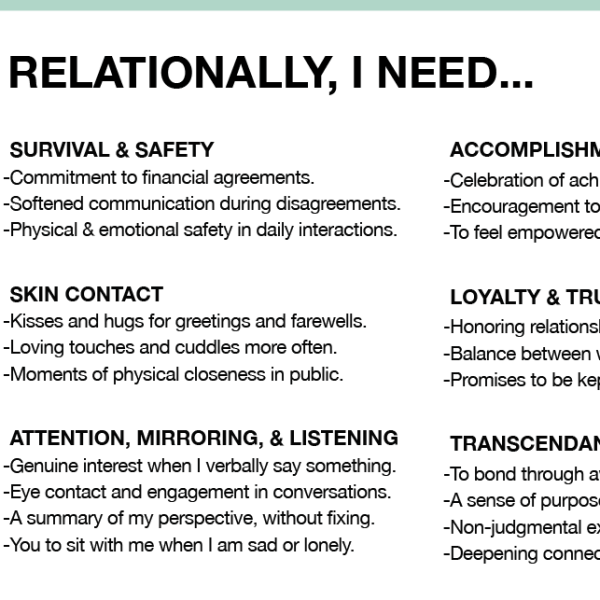
Close relationships can activate different parts of us, for better and for worse. We’re all human, moving through a range of emotions daily. Sometimes we’re moved toward warmth, joy, and connection. Other times, we move toward protection, leaving us overwhelmed, ashamed, or even unrecognizable to ourselves.
Challenging moments are inevitable in relationships, but our reactions don’t always bring us what we need or help us heal hurt. Understanding our default patterns can help us respond with more choice and compassion, and find our way back to connection.
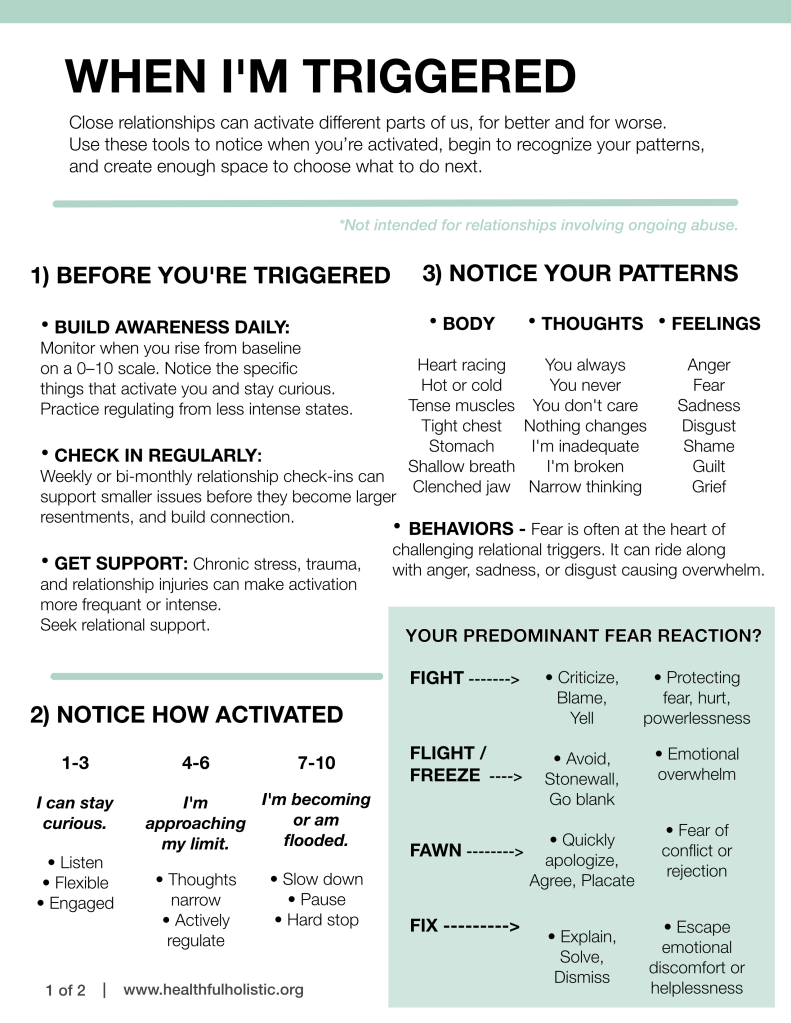
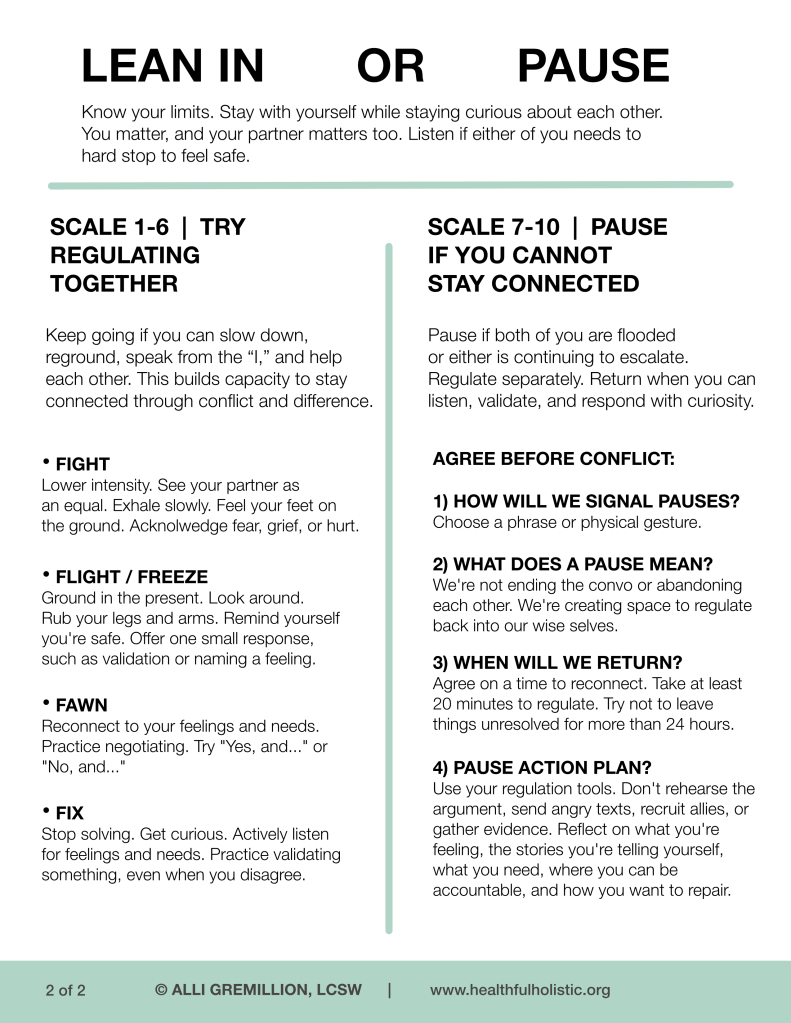
Here’s a 2-page PDF, inspired by regulation and relational approaches to conflict. Use it to recognize your patterns, gauge your level of activation, and find ways to lean in or pause while staying connected. Make this your own:
Keep in mind:
- Triggers aren’t inherently bad. We can be activated towards love, excitement, connection, or protection. The goal isn’t to eliminate activation, but to notice it, work with it, and choose how we respond.
- Your reactions have a history. Fight, flight, freeze, fawn, and fix are protective responses worth understanding and taking responsibility for. Your default response is shaped by your upbringing, past relationships, and/or what’s happening in your relationship today. It may be an old adaptation, a response to something genuinely hurtful now, or both. Understanding the pattern isn’t about blaming yourself or your partner, but it can help you see what needs to shift.
- Activation can bring shame. You might not recognize yourself at your most activated. Meet that part of yourself with curiosity rather than judgment. Accountability and self-compassion can coexist.
- Your partner’s activation matters too. Stay connected to yourself while remaining curious about what is happening for your partner. You don’t have to agree with their experience to acknowledge or validate it. Understand where their patterns come from and how your actions impact them.
- Regulation can be relational. Sometimes you can help each other return to connection while staying in the conversation. Notice bids for reassurance, validation, space, or grounding. Let them soften you, or offer a bid yourself.
- A pause is not abandonment. When both of you are flooded and things turn mean, sometimes the most compassionate choice is to pause and protect the relationship. Agree ahead of time how you’ll pause, regulate, and return to each other.
- Understanding a pattern doesn’t excuse harmful behavior. You can have empathy for why a behavior happens while still taking responsibility for its impact and repairing when needed. Healthy anger and fear are okay. Hitting, name-calling, yelling, or harming yourself or someone else are not.
- You don’t have to figure it out alone. Chronic stress, trauma, and relationship injuries can intensify activation. Relational therapy can help you understand your patterns and build new ways of responding.
Resources that inspired PDF
(Books) Waking the Tiger: Healing Trauma, by Peter Levine, informed the guide’s focus on defensive responses, fight, flight, freeze, and the body’s response to perceived threat. Why Zebras Don’t Get Ulcers by Robert Sapolsky offers research-rich information on stress physiology and how the body responds to stress.
(Online Course) Dealing with Conflict by The Gottman Institute provides many courses on supporting couples in navigating conflict, regulation, pausing, and moving towards repair.
(Therapy Approach) Cognitive Behavioral Therapy (CBT) informs the body, thoughts, feelings, and behaviors framework, as well as emphasis on noticing patterns and creating more choice in how we respond.
(Couples Approach) Emotionally Focused Therapy (EFT) informed the relational focus on recognizing protective patterns, accessing underlying emotions, and staying connected through difficult moments.
(Framework) Window of Tolerance describes the range where we can stay present, flexible, and responsive. A 0-10 scale can help us notice where we are within that window. As activation rises, we may move into hyperarousal and feel overwhelmed or reactive, or into hypoarousal and feel numb, shut down, or disconnected. The goal is to notice our limits and build capacity to return to a more regulated state.
Reflection
We’re all human, moving through joy, connection, pain, and challenge every day. Your protective responses may look different across relationships, time, and contexts. Meet yourself and your partner with curiosity rather than shame, and find more space and choice in how you move through difficult moments toward deeper connection. May you be safe. May you be healthful.
Ongoing series: Self-awareness, Emotions, Needs, Triggers
This article is not intended for relationships involving domestic violence or abuse. If you are experiencing this, please seek the care you deserve by calling 1-800-799-SAFE.