

Welcome to a series on relational fundamentals, devoted to deepening your self-awareness and enhancing your relationships. Our first fundamental aspect to explore: emotions.
Emotions are instinctive, subjective, and ever-changing physiological states, offering rich and complex experiences throughout life. They dance alongside different facets of our being, including physical reactions, thoughts, behaviors, beliefs, needs, desires, and more.
Understanding your emotions includes acknowledging that:
- Feelings are a normal, vital part of being human, keeping us alive and living well.
- Automatic emotional responses are universal experiences beyond our control, yet we hold the power to pause and choose how we respond to them.
- All emotions are impermanent, whether joyful or uncomfortable.
- Feelings aren’t facts but protective guides signaling something is needing your attention and care.
- Conflicting emotions can coexist, with one part of you feeling sadness while another part experiences joy.
- Thoughtfully naming our feelings out loud fosters self-regulation and effective conflict management.
Let’s delve into the three resources below as a practice of understanding the myriad of feelings within you. Right now, I feel…
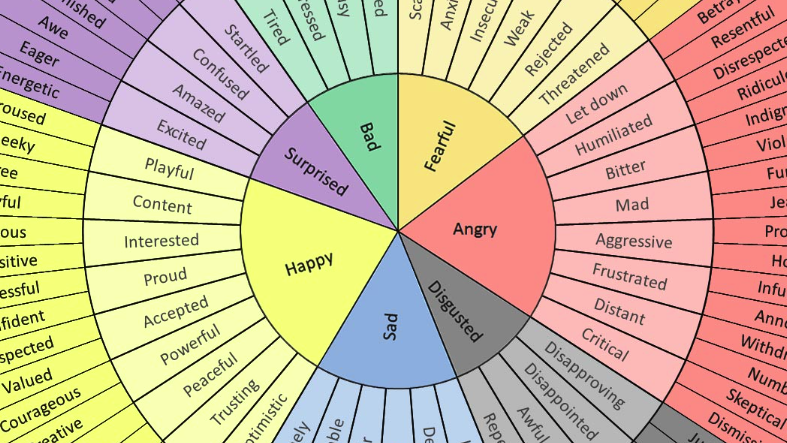
This feelings wheel serves as a visual guide, helping you articulate yourself in greater detail. It’s okay not to know exactly how you feel, so start from the middle of the circle and expand from there. Additionally, as you explore, you may begin to notice how you’re feeling multiple things simultaneously. Embrace the beauty of this complex, human experience. If you’re feeling overwhelmed, focus on one intense emotion you’re noticing.
2. Non-violent communication PDF
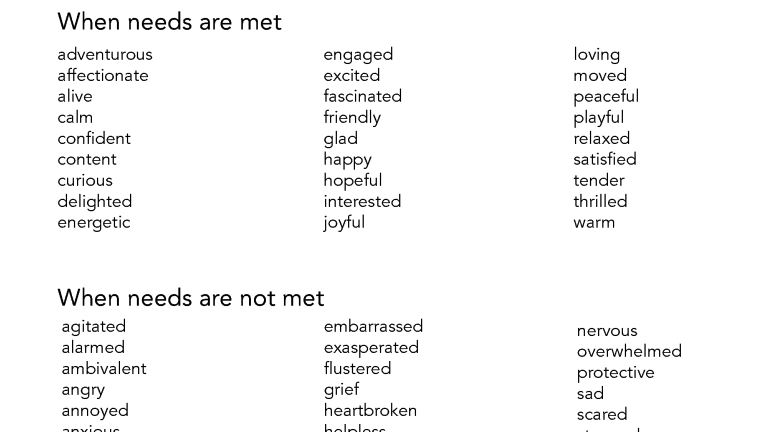
This resource is a valuable tool for recognizing and expressing your feelings, particularly when your needs are either met or unmet. The goal is to develop the skill of communicating your feelings without triggering defensiveness or blame in others. This timeless tool, passed down by my therapist over a decade ago, can be integrated into your daily life, serving as a helpful reminder that feelings of disconnect may signal unmet needs.
3. Atlas of universal emotions (interactive)
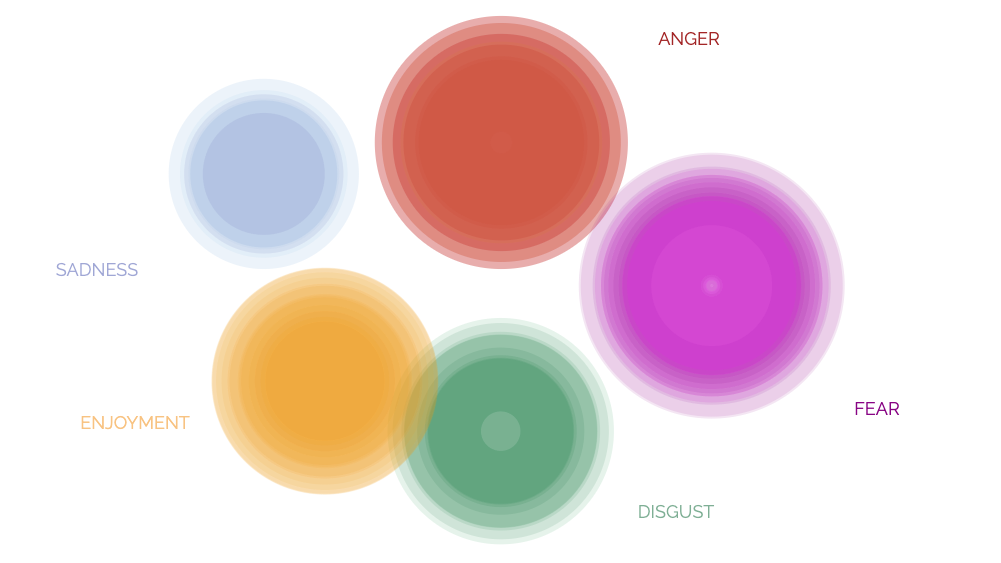
Supported by the Dalai Lama, this interactive atlas delves into the intensity levels of each universal emotion. For example, sadness can feel like disappointment at a less intense state, and feel like anguish at a more intense state. Click around and discover the nuanced states of your basic emotional landscape.
Other resources
(Book) Atlas of the Heart: Mapping Meaningful Connection and the Language of Human Experience
(Book) The Upside of Your Dark Side: Why Being Your Whole Self – Not Just Your “Good” Self – Drives Success and Fulfillment
(Blog Post) Navigating challenging emotions: a guide using the self-compassion tool RAIN
(Blog Post) Your essential guide to daily mental health: emotional wellness
(Blog Post) The essential ingredient to better relationships: self-awareness
(Visual) Anger Iceberg
(Video) Brené Brown on Empathy
Reflection

Abstract drawings by me, Alli.
This series is a heartfelt response to the emotional needs of my clients over the years, spanning all ages. Identifying our feelings without resistance, offers a pathway to navigating the complexity of our inner worlds and leads to self-awareness, empowerment and compassion. I hope you learn to find strength and solace in the rich tapestry of your emotional world. May you feel as you are. May you feel healthful.



 Healthful